Consumer Electronics
Compact, polished enclosures with texture, color matching, and assembly-friendly geometry.
Manufacturing · Injection Molding
SDI injection molding programs bridge industrial design and factory production — enclosure geometry, material selection, and tooling strategy engineered for repeatable, cost-effective molded parts.
Our Silicon Valley mechanical team coordinates DFM reviews, prototype tooling, and production mold release with electrical, firmware, and assembly disciplines so your product ships with molded components that fit the first time.
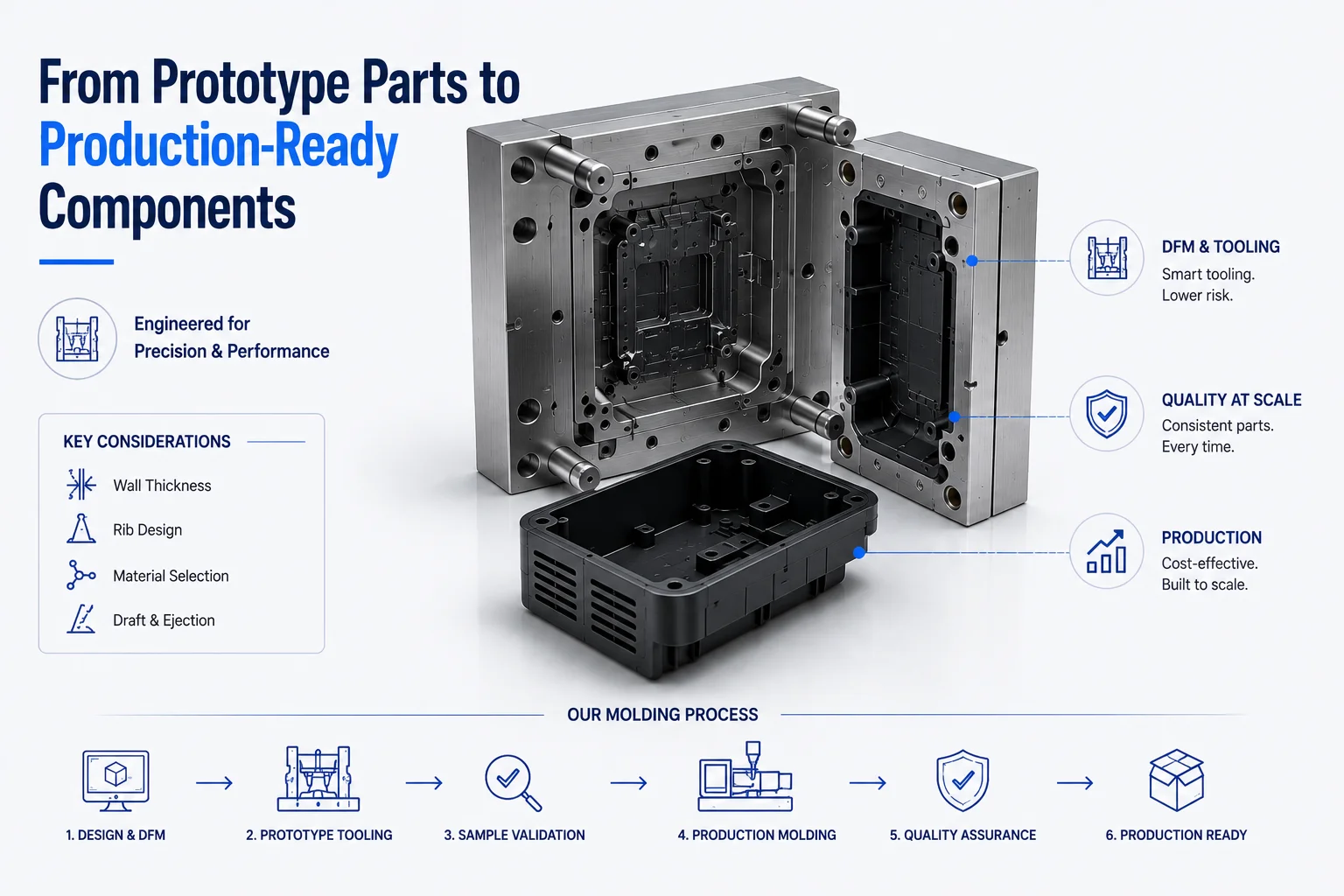
DFM principles applied before tooling is cut — not after parts fail first article inspection.
Every molded enclosure passes design gates for wall thickness, draft angles, rib geometry, and gate placement so parts eject cleanly and assemble without force-fit rework.
SDI mechanical engineers work alongside industrial design and factory partners to validate material flow, shrink compensation, and tolerance stacks before steel is committed.
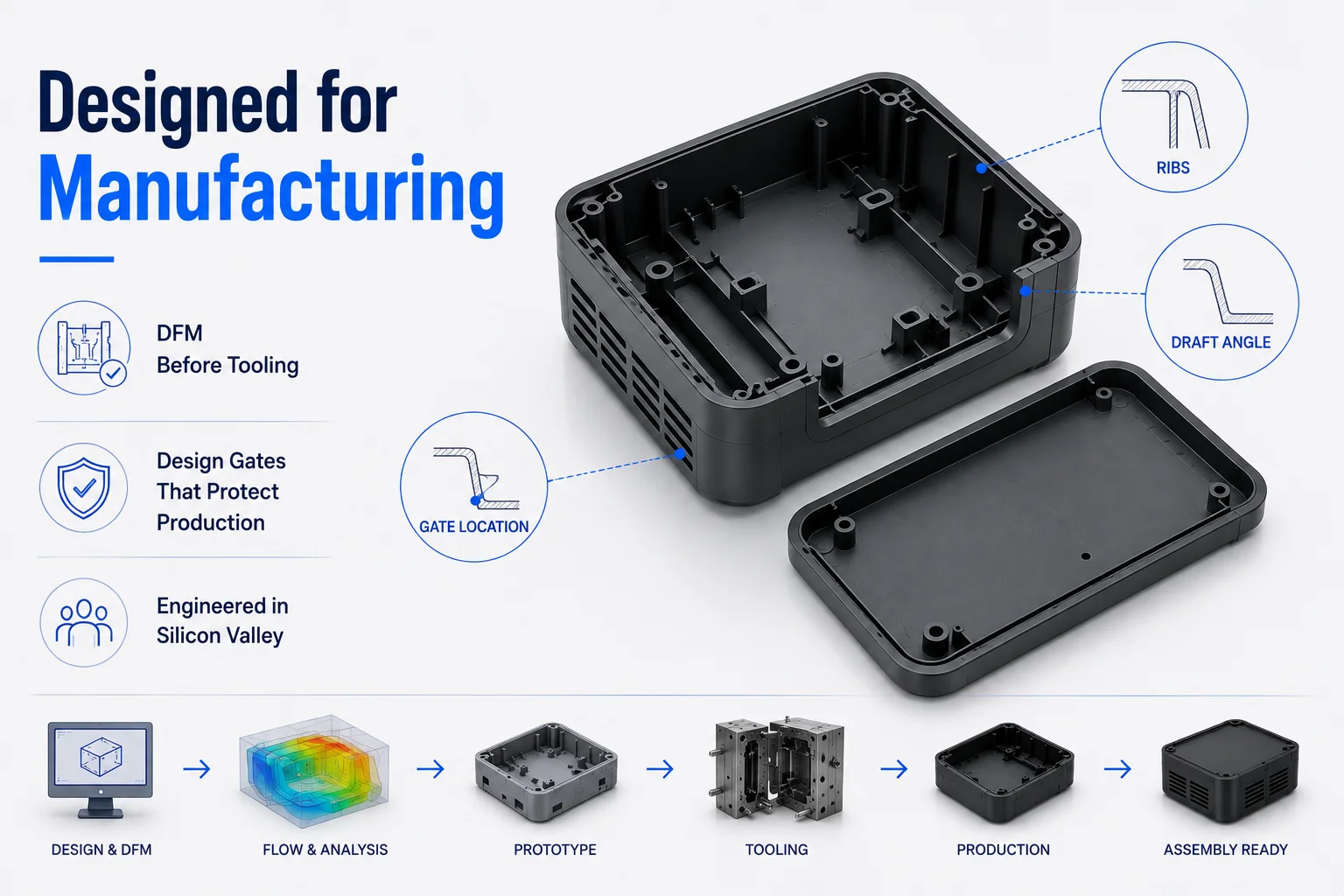
Disciplines from enclosure concept through production mold support.
Industrial design and mechanical CAD for molded enclosures aligned to brand and assembly requirements.
Wall thickness, draft, ribs, bosses, and snap-fit geometry optimized for moldability and cost.
Resin selection for strength, appearance, UV resistance, flame rating, and regulatory compliance.
Soft tooling and bridge molds for EVT/DVT validation before production steel.
Multi-cavity steel molds with documented process parameters and maintenance schedules.
First article inspection, process tuning, and ongoing vendor coordination.
Application categories where SDI injection molding programs deliver production-ready molded components.
Compact, polished enclosures with texture, color matching, and assembly-friendly geometry.
Durable housings for mobile platforms, arms, and sensor pods in demanding environments.
Connected product enclosures with antenna clearance, sealing, and service access.
Patient-safe housings with biocompatible materials and cleanability requirements.
Harsh-environment enclosures with impact resistance and ingress protection.
Wall-mounted and ceiling devices with aesthetic finishes and reliable mounting features.
Design checklist tokens applied during every molded component release.
Mechanical architects drive DFM gates — not just aesthetic industrial design.
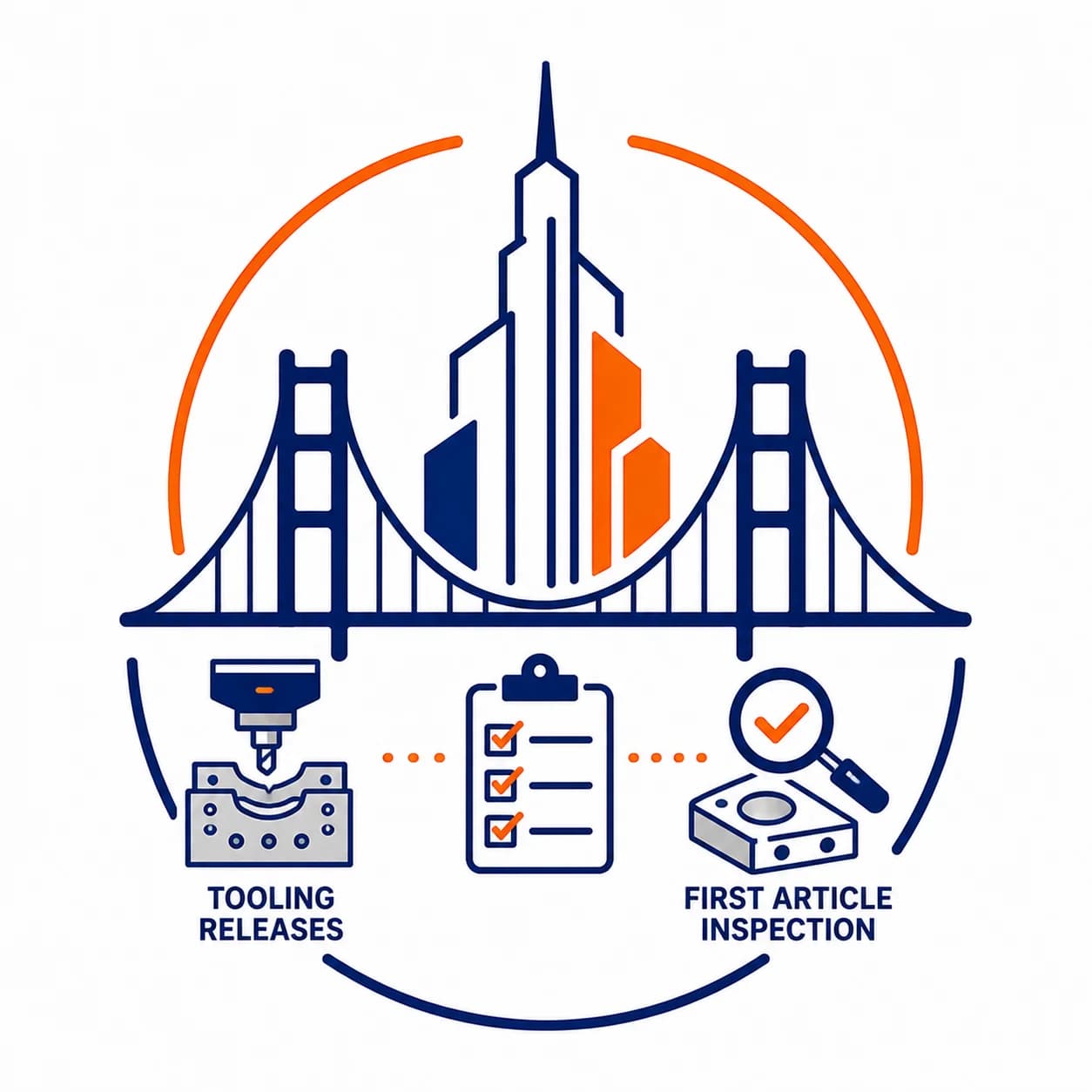
California engineers review tooling releases and first article inspection.
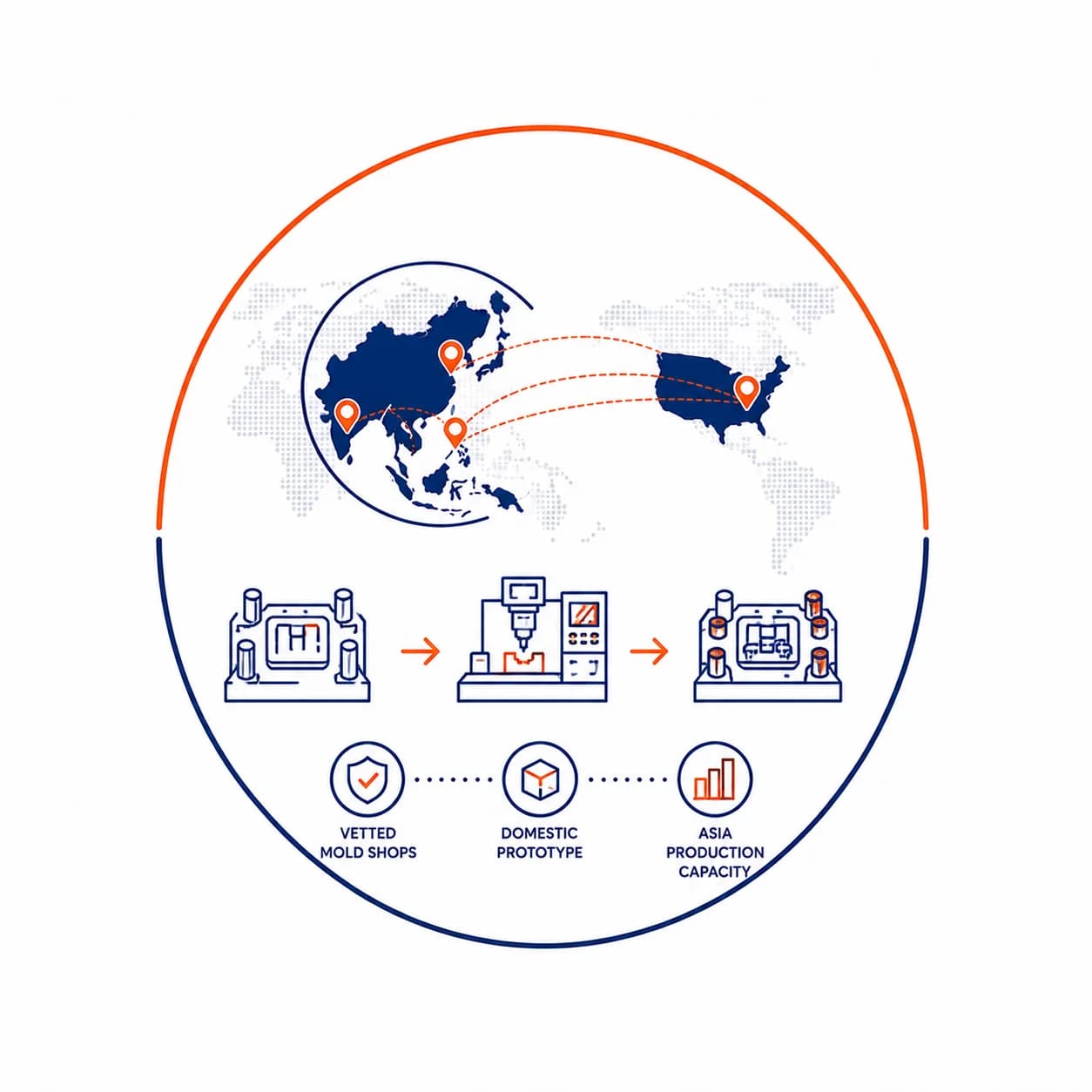
Vetted mold shops with domestic prototype and Asia production capacity.
Molded parts coordinated with PCB, firmware, and box build assembly.
Complementary workflows spanning design through product launch.
Enclosure concepts and CMF aligned to moldability constraints.
CAD, tolerance stacks, and DFM documentation for tooling release.
Internal clearance, connector access, and thermal paths validated against mold.
Prototype and production tooling with first article validation.
Molded enclosures integrated with PCB, harness, and final product assembly.
Ramp coordination, yield tracking, and commercial release documentation.
Share your enclosure requirements, material targets, or existing CAD. Our injection molding team will scope DFM, tooling, and production support as one integrated program.
Request Free EstimateCommon questions about injection molding, DFM, tooling, materials, and production timelines.
Enclosure design, DFM, material selection, prototype tooling, production tooling, and manufacturing support.
Design for manufacturing — optimizing wall thickness, draft, ribs, gates, and geometry so parts mold reliably and assemble cleanly.
Yes. Soft tooling and bridge molds for EVT/DVT before committing to production steel.
ABS, PC, PP, nylon, TPE, and engineering resins selected for mechanical, aesthetic, and regulatory requirements.
Yes. Internal clearance, connector access, and assembly interfaces are validated against molded geometry.
Consumer electronics, robotics, IoT, medical, industrial, and smart building products among others.
Typical soft tooling runs 3–6 weeks depending on part complexity and finish requirements.
Production steel molds typically run 8–14 weeks including T1 sampling and process validation.
Yes. Texture specs, color masterbatch, and cosmetic validation are part of tooling release.
Submit your CAD, material requirements, and volume targets through our contact form.